
Smart cleaning is a simple way to keep your home under control without spending all day cleaning or constantly repeating the same tasks.
Most people don’t struggle because they don’t clean. They struggle because they clean without a system. One day it’s the kitchen, another day it’s the bathroom, and somehow the house never really feels fully done.
Smart cleaning fixes that by giving you a clear structure. You stop reacting to mess and start following a routine that actually makes sense.
It works especially well for busy homeowners, families, and renters who want a clean home but don’t have time for constant deep cleaning.
This approach is similar to how professional cleaning services like Prestij Cleaning work, where consistency and structure matter more than random effort.
In this guide, you’ll learn the 5 rules of smart cleaning, why they work in real homes, and how to actually apply them without overthinking it.
What are the 5 rules of smart cleaning?
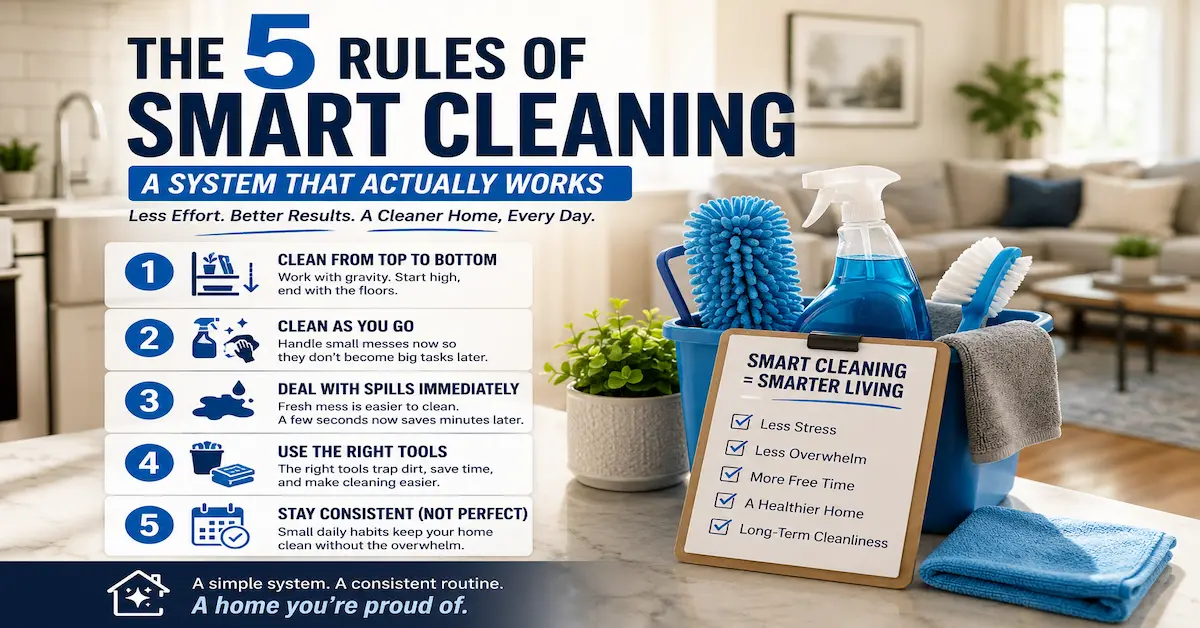
Smart cleaning is a structured way of cleaning your home that helps reduce wasted effort and repeat work. The 5 rules are: clean from top to bottom, clean as you go, deal with spills immediately, use the right tools, and stay consistent. Together, they help you clean faster and keep your home under control without needing constant deep cleaning.
Traditional Cleaning vs Smart Cleaning
| Traditional Cleaning | Smart Cleaning |
| Random order | Structured system |
| More effort, less result | Less effort, better results |
| Same areas cleaned again and again | One-pass cleaning flow |
| No clear direction | Step-by-step system |
The real difference isn’t just effort it’s repetition.
Traditional cleaning often feels like you’re always behind. You clean one area, but another gets messy again. Smart cleaning breaks that cycle by giving every task a clear order, so you don’t keep going back over the same work.
When the structure is right, cleaning feels lighter. You move through the home once, in a natural flow, and you’re actually done instead of “almost done.”
The 5 Rules of Smart Cleaning
Rule 1: Clean From Top to Bottom
This rule is basically about working with gravity instead of fighting it. Dust, crumbs, and tiny bits of dirt always fall down, so your cleaning order should follow that same direction.
Start higher up first ceilings, fans, shelves. Then move to tables, counters, and furniture. Floors always come last.
If you do it the other way around, you’ll feel it immediately. For example, mopping first and then dusting shelves just puts fresh dirt back onto the floor. So you end up redoing work without even realizing it.
When you follow the correct order, things stop feeling repetitive. You move through the space once, in a clean flow, and you’re actually done instead of circling back to fix mistakes.
Rule 2: Clean as You Go
This just means you don’t wait for mess to “build up into a task.” You handle small things immediately while you’re already there.
In real life, this shows up in simple moments. Wiping a spill while cooking instead of leaving it for later. Or quickly rinsing the bathroom sink so toothpaste and soap don’t dry and stick.
It doesn’t feel like a big habit, but it quietly changes everything. Instead of facing one big cleaning job later, you’re just dealing with tiny moments as they happen.
That’s how mess stays under control without ever really “getting out of hand.”
Rule 3: Deal With Spills and Mess Immediately
Fresh mess is always easier. The longer it sits, the more it turns into something stubborn.
Grease in the kitchen is a good example. Wipe it right away and it’s gone in seconds. Leave it too long and it cools, sticks, and suddenly needs scrubbing. Same with coffee spills quick wipe and you’re done, but wait and it becomes a stain you actually have to fight.
Bathrooms are even more obvious. Water spots, soap marks, and toothpaste splashes don’t look like much at first, but once they dry, they take way more effort to remove.
That’s why timing matters more than effort here. A few seconds now usually saves several minutes later, and professionals know this very well they never let small messes sit.
Rule 4: Use the Right Tools for the Job
Tools decide how hard cleaning feels more than effort does.
A microfiber cloth, for example, doesn’t just move dirt around it actually traps it. A regular cloth often just spreads it out. That’s the difference between cleaning once and cleaning twice.
Same idea with vacuums. A decent HEPA vacuum doesn’t just “pick up dust,” it pulls fine particles out of surfaces that normal sweeping misses completely. Steam cleaners work the same way for stuck dirt and grime.
When you use the wrong tools, you end up doing more work for worse results. When you use the right ones, the job feels lighter and finishes faster without needing constant rework.
It’s not about having expensive tools it’s about not fighting the surface you’re trying to clean.
Rule 5: Stay Consistent (Not Perfect)
Consistency beats deep cleaning every single time. A lot of people wait until everything looks messy, then try to fix it all in one long session. It works, but it’s tiring and doesn’t last.
A better approach is small, repeatable habits. A few minutes every day to reset key areas, plus a simple weekly clean, keeps things under control without building stress.
Even something as small as a 10-minute reset putting things back, wiping main surfaces, clearing clutter stops mess from stacking up in the first place.
The biggest change isn’t physical, it’s mental. When cleaning becomes routine, it stops feeling like a “big task” you’re avoiding and turns into something that just stays under control in the background.
Why These Smart Cleaning Rules Actually Work
These rules work because they turn cleaning into a system instead of a random task. Most people clean based on what they notice first, which leads to wasted effort and missed spots. Once you follow a structure, everything becomes more predictable and less stressful.
The biggest change is efficiency. You clean faster because you’re not going back over the same areas again. You also avoid repeating work, since each step naturally leads into the next without confusion or overlap.
There’s also a mental benefit. Having a clear method removes decision fatigue. You’re not constantly thinking about what to do next; you just follow the flow.
This is exactly how professional cleaners operate. They don’t rely on motivation or mood. They follow systems that work every single time, which is why the results are consistent and reliable.
How to Apply Smart Cleaning in a Real Home
Smart cleaning only works when you actually apply it in a real routine, not just as ideas on paper. The good thing is you don’t need anything complicated. You just need a simple flow that you repeat every time you clean.
Step-by-step flow
1. Quick declutter
Start by removing obvious clutter first. Things like clothes, dishes, or items out of place. This clears the space so you can actually clean properly without working around mess.
2. Start top-to-bottom
Always clean from higher areas down to the floor. Dust shelves, wipe surfaces, then finish with floors. This prevents re-cleaning the same spots again.
3. Handle spills immediately
If you see a spill or stain, deal with it right away. Fresh mess is always easier to clean than dried buildup, and it keeps things from getting worse.
4. Use proper tools
Microfiber cloths, a decent vacuum, or basic cleaning sprays make a big difference. The right tools reduce effort and improve results without extra scrubbing.
5. Finish with consistency habits
Do small final habits like resetting surfaces, putting things back in place, and quick touch-ups. This keeps the home stable between deeper cleans.
room-by-room approach
Different rooms need slightly different focus, but the same rules still apply.
Kitchen:
Focus on spills, counters, and high-use surfaces. Clean as you cook when possible.
Bathroom:
Quick daily wipe-downs prevent soap scum and water stains from building up.
Living room:
Declutter is key here. Once the space is clear, dust and vacuum follow easily.
This workflow keeps cleaning simple. Once it becomes routine, you stop thinking about “where to start” and just move through the process naturally.
Common Smart Cleaning Mistakes People Make
Most people don’t struggle with cleaning because they’re not trying hard enough. The real issue is usually the approach. A few small mistakes can make the whole process feel harder than it needs to be.
Cleaning in the wrong order
One of the biggest problems is doing tasks in the wrong sequence. For example, vacuuming or mopping before dusting means dirt falls back onto already cleaned areas. It creates unnecessary repetitive work.
Using too many products
A lot of people think that more products mean better cleaning. In reality, it often slows things down and makes surfaces harder to manage. Most homes only need a few basic, effective cleaners used properly.
Ignoring daily small messes
Small spills, clutter, or surface dirt might not look like a big deal, but they build up quickly. When ignored, they turn into longer, more tiring cleaning sessions later.
Trying to “deep clean” instead of system cleaning
Deep cleaning everything at once sounds productive, but it’s not sustainable. Without a system, you end up repeating the same cycle of mess and exhaustion. Smart cleaning focuses on small, consistent actions instead.
No routine → burnout cycle
Without a routine, cleaning becomes reactive. You only clean when things get overwhelming, which leads to stress and burnout. A simple structure prevents that cycle from building up in the first place.
Smart Cleaning in Busy American Homes (Why It Matters More Today)
Modern homes in the US are busier than ever. Between work, commuting, family routines, and everything else in between, most people simply don’t have the time or energy to clean for hours every week. That’s exactly why smart cleaning has become more important than it used to be.
A common pattern in busy households is simple: cleaning gets pushed to the weekend. The problem is, by that time, small daily messes have already built up into something bigger, which turns a short task into a long, tiring session.
In family homes, this happens even faster. Kids, cooking, guests, and constant movement mean there’s always something to tidy up. It never really stops, it just accumulates quietly in the background.
In warmer, humid areas like Florida, there’s an extra challenge. Moisture in the air can make surfaces feel dirtier faster, and if things are left too long, you start seeing issues like odors, stickiness, or light buildup that’s harder to remove later.
This is where structure matters more than effort. When you follow a simple cleaning system instead of reacting to mess whenever it appears, you naturally stay ahead of it. You spend less time “catching up” and more time just maintaining things in a manageable state.
Effort still matters, but without a system, it usually doesn’t last.
When Professional Cleaning Makes More Sense
Smart cleaning goes a long way, but there are moments when doing everything yourself stops being realistic. That’s usually when professional cleaning becomes the more practical option.
One clear sign is when your normal routine stops working. Even with good habits, some homes reach a point where surface-level cleaning isn’t enough, and the space needs a proper reset.
Deep cleaning is another factor. Kitchens, bathrooms, and less-visible areas naturally build up grime over time. These spaces often need more detailed attention than regular maintenance can provide.
Time pressure is probably the biggest reason people look for help. When work schedules, family responsibilities, or general life stress build up, cleaning is often the first thing to get delayed. And once it gets delayed too much, catching up becomes overwhelming.
Larger homes or high-traffic households also face this more often. More people simply means more mess, more movement, and more frequent cleaning needs. Staying consistent becomes harder, even with good routines.
This is where services like Prestij Cleaning fit in naturally. The focus isn’t random or rushed cleaning, but structured systems that help maintain long-term cleanliness. It’s less about quick surface fixes and more about keeping the home consistently under control over time.
Smart Cleaning Isn’t About Hard Work: It’s About Working Smarter in the Right Order
Keeping a home clean isn’t about working harder; it’s about working in the right order. That’s really what smart cleaning comes down to. Simple rules that remove guesswork, reduce wasted effort, and help you stay in control of your home without spending your entire day cleaning.
For homeowners who want a more consistent level of cleanliness without the stress of managing everything themselves, professional support can be a practical option. Services like Prestij Cleaning use structured cleaning systems instead of random routines, which helps maintain long-term cleanliness, especially in busy homes where time is always limited.